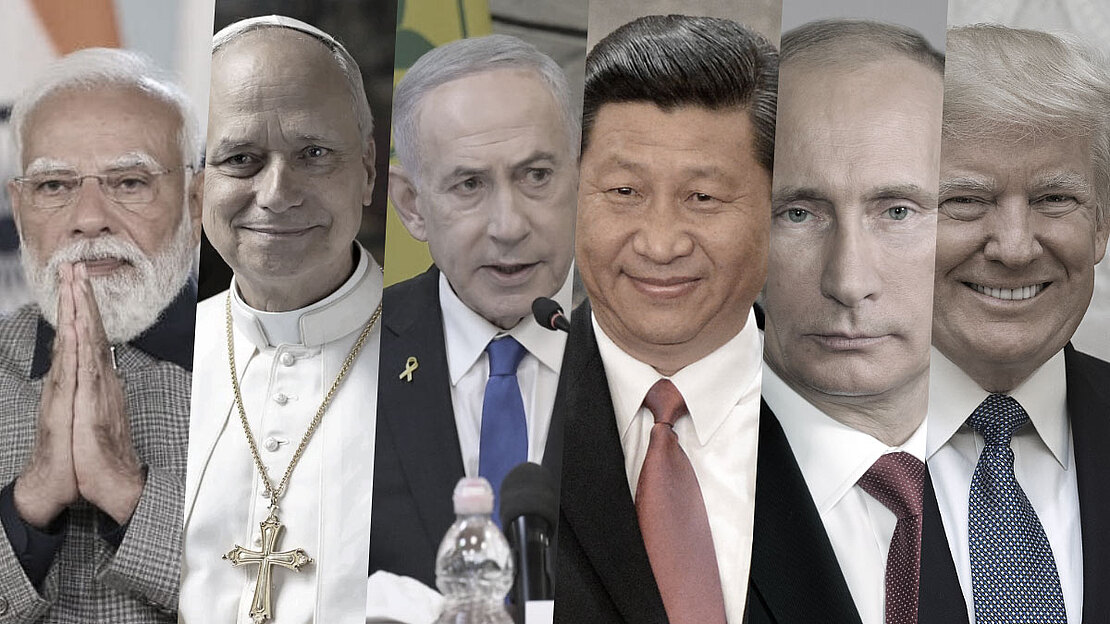
The Gallup International End-of-Year (EOY) Survey, the world’s longest-running global public opinion study, reveals a striking contrast in how the world views today’s most prominent global figures. While political leadership is increasingly associated with polarization and rejection, Pope Leo emerges as the world’s most positively viewed global leader, commanding broad goodwill across continents.
Conducted annually since 1977, the End-of-Year survey is carried out by the Gallup Internation-al Association (GIA) — a worldwide network of more than 65 professional and independent poll-ing organizations operating across continents.
The Association was founded in 1947 by George Gallup, the pioneer of modern scientific public opinion polling, and continues to bring together some of the most experienced and respected survey organizations from around the world to provide a unique, real-time snapshot of global public sentiment.
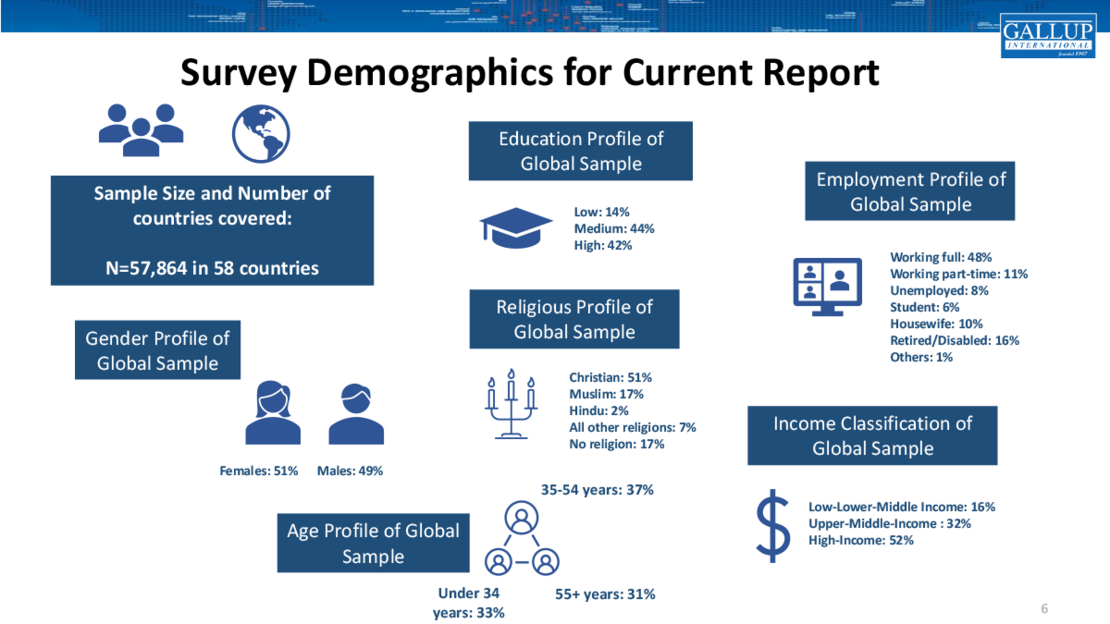
The latest End-of-Year Survey covers 61 countries and is based on interviews with 64,097 adults, making it one of the most comprehensive internationally coordinated assessments of public sentiment anywhere in the world. A defining feature of the study is that it is conducted within one of the shortest synchronized global fieldwork windows, ensuring that public opinion is cap-tured at the same moment across diverse political, economic, and cultural contexts. This press release is based on data from 58 countries covering a sample of 57,864 adults.
A Clear Global Hierarchy of Leadership Emerges
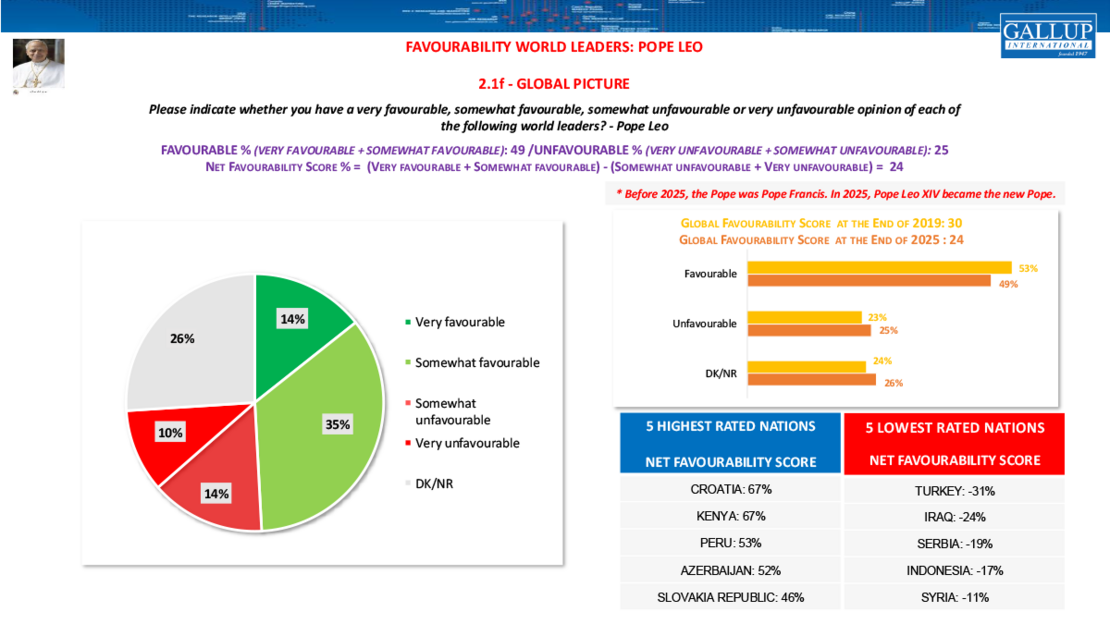
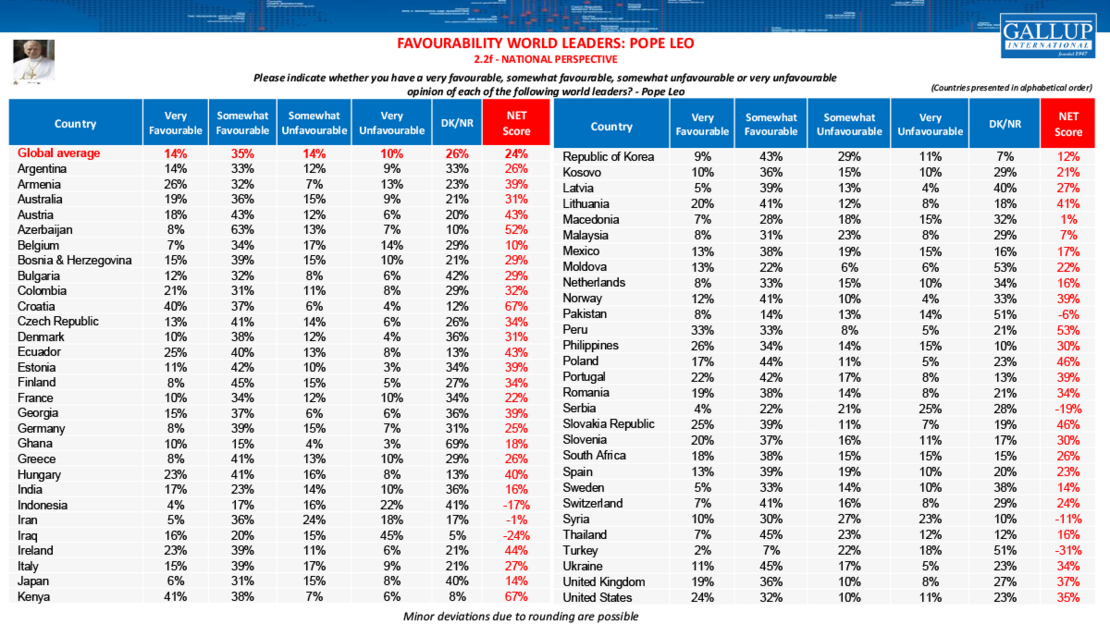
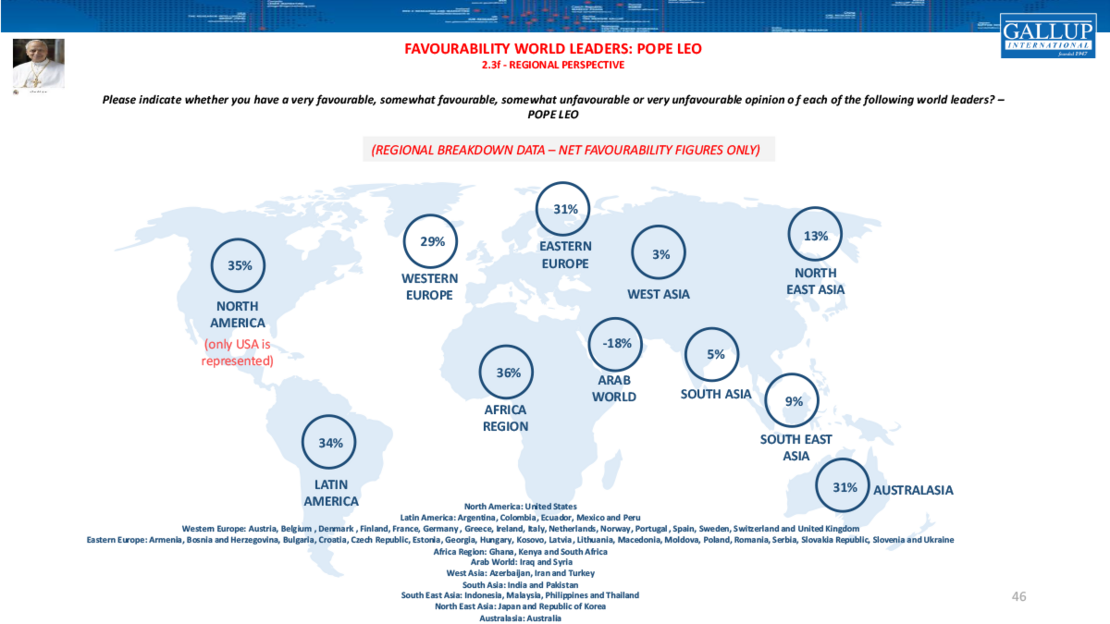
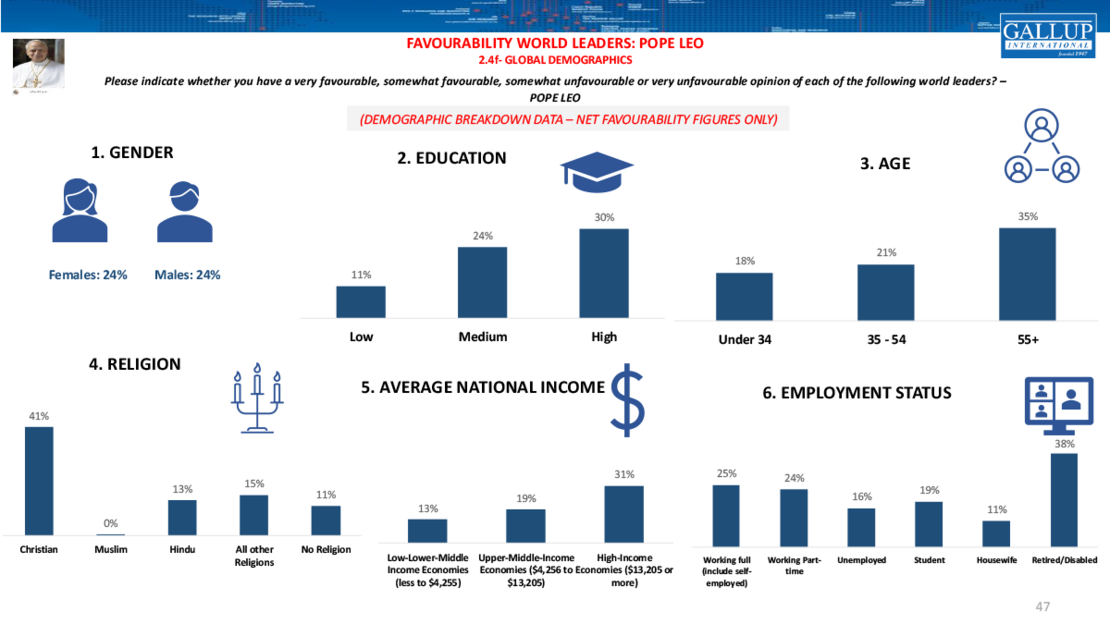
Globally, Pope Leo enjoys a favourable opinion from 49 % of respondents, while 25 % view him unfavourably and 26 % say they do not know or have no opinion, producing a net favourability score of +24 — the only clearly net positive global score among all leaders measured. He en-joys his strongest approval in Croatia, Kenya and Peru, while his weakest relative standing ap-pears in Turkey, Iraq and Serbia.
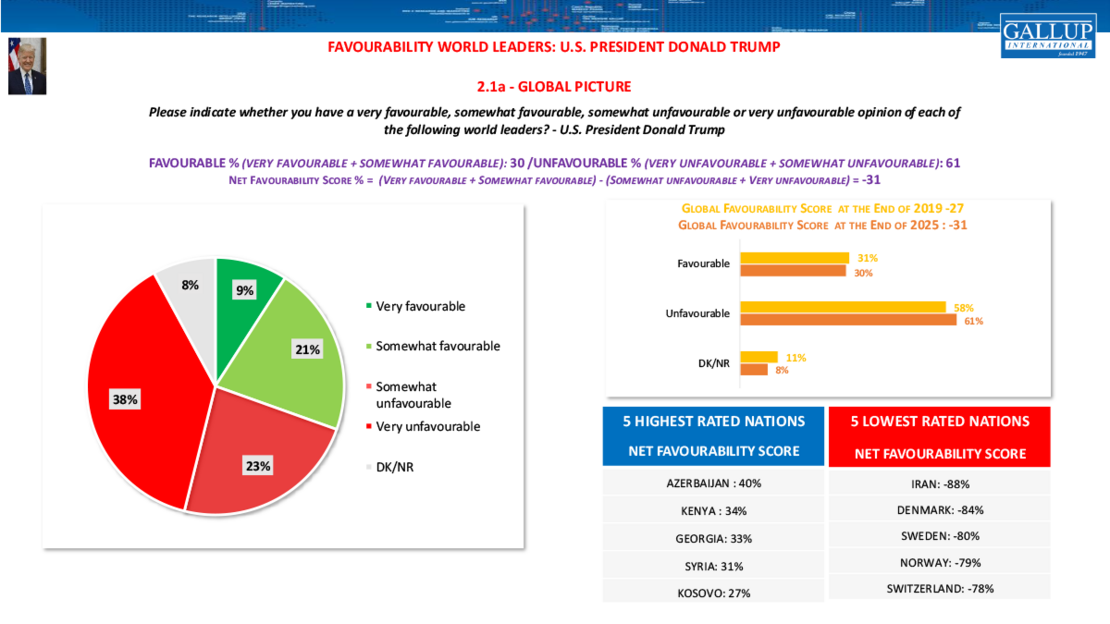
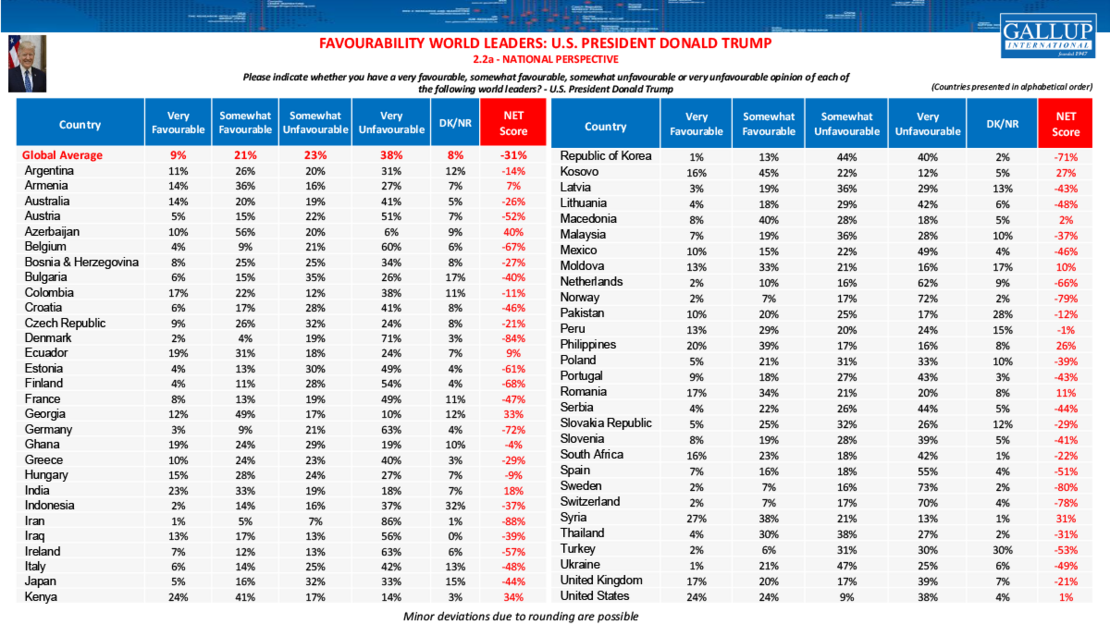
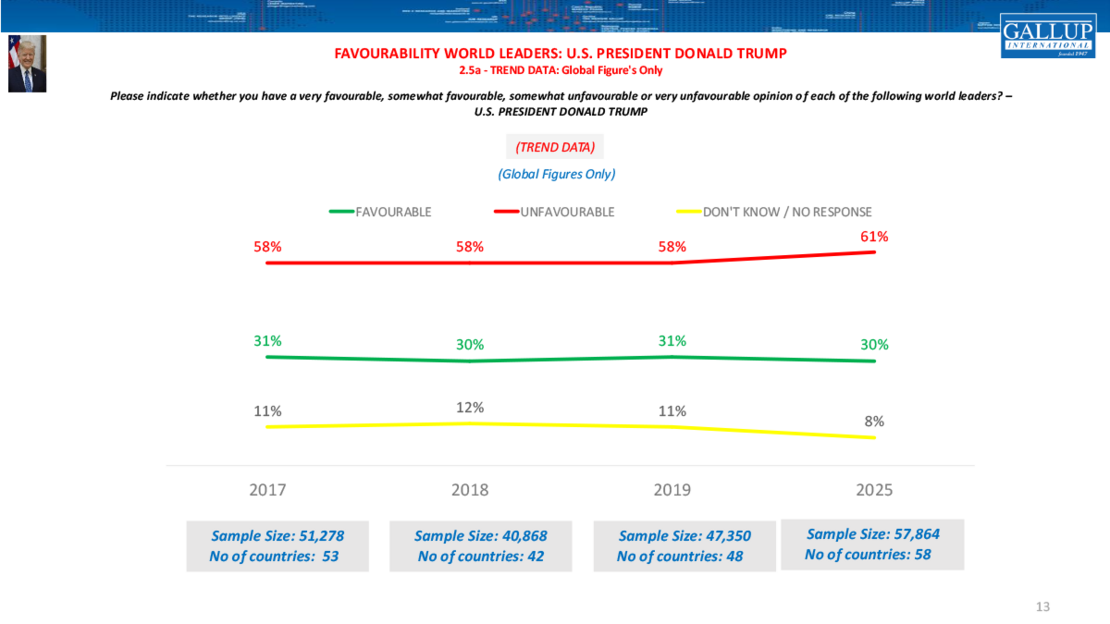
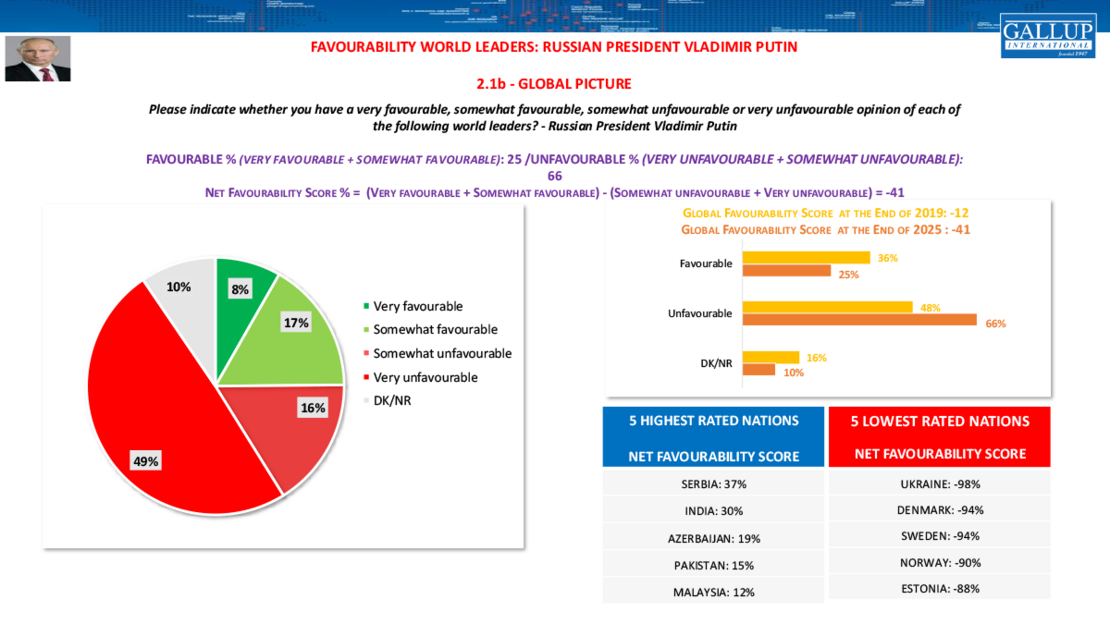
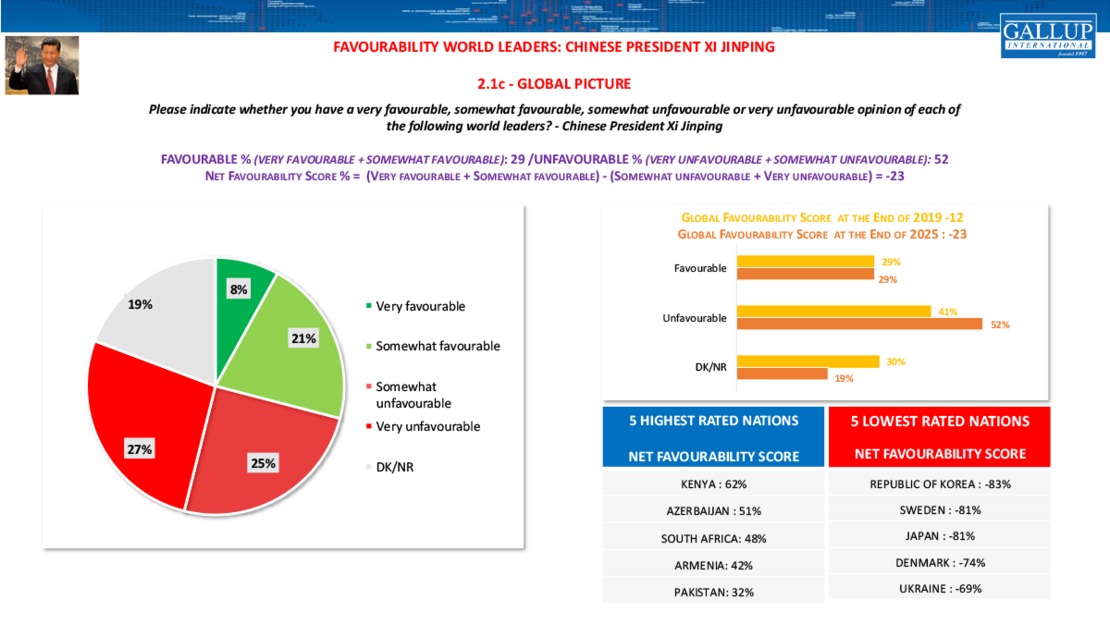
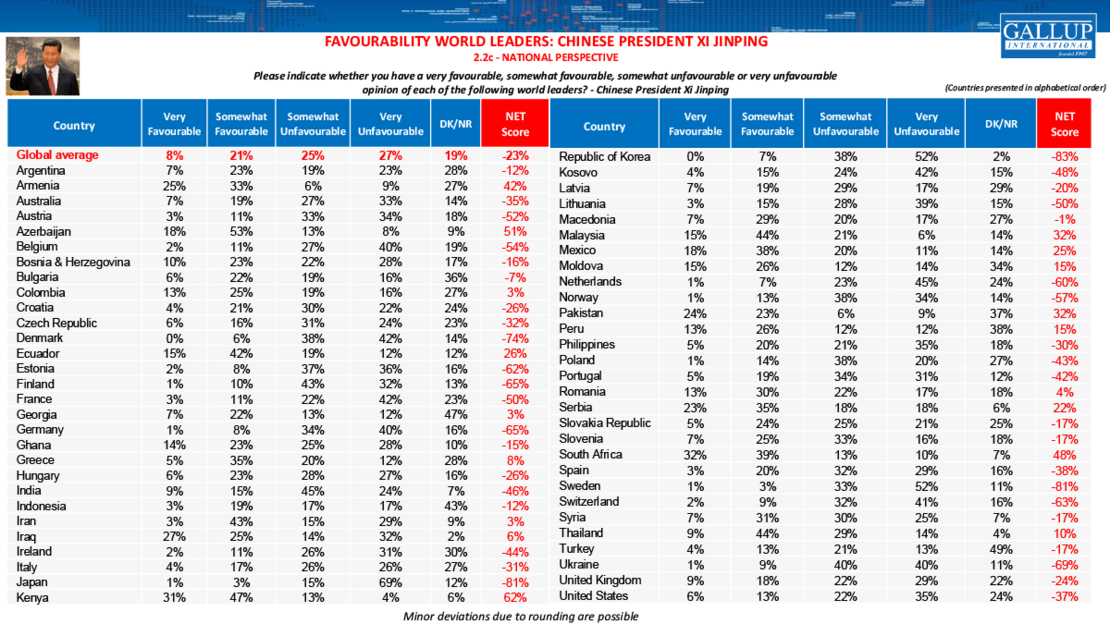
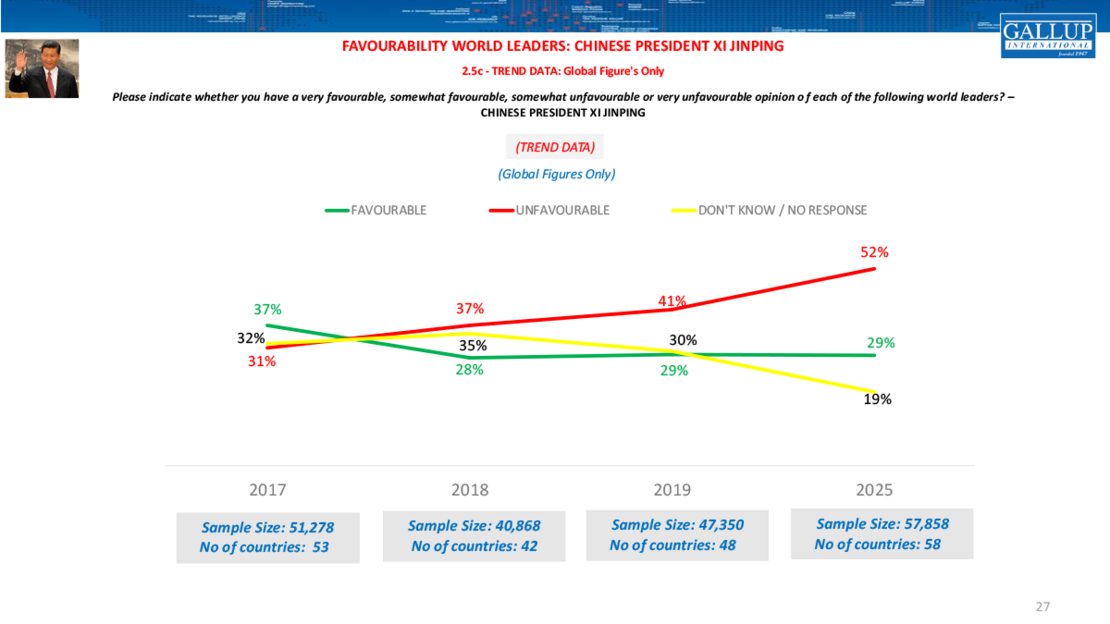
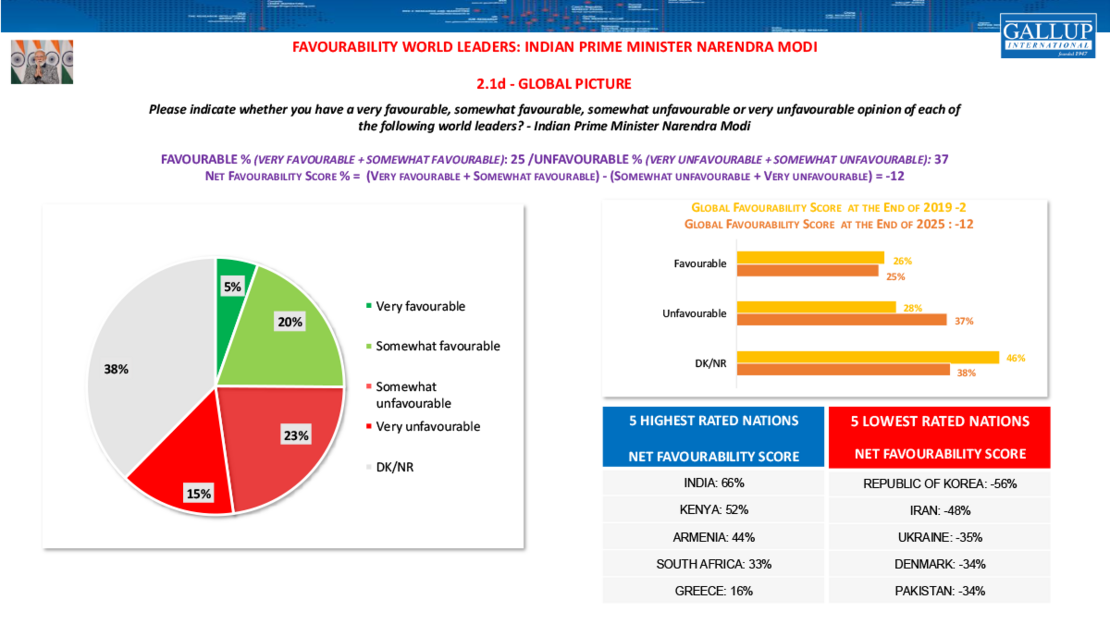
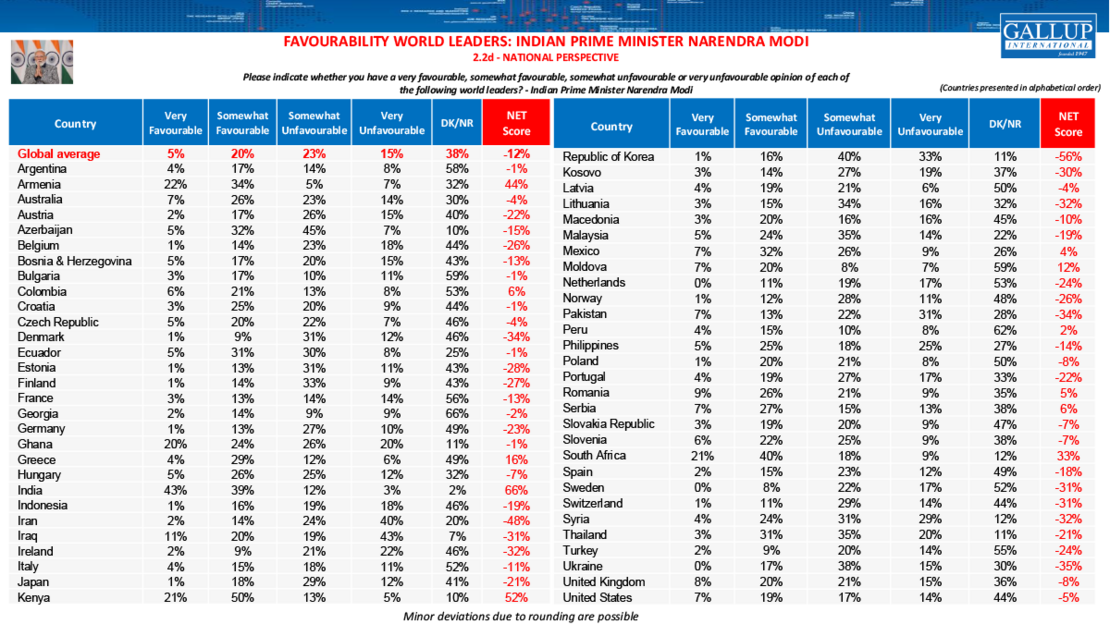
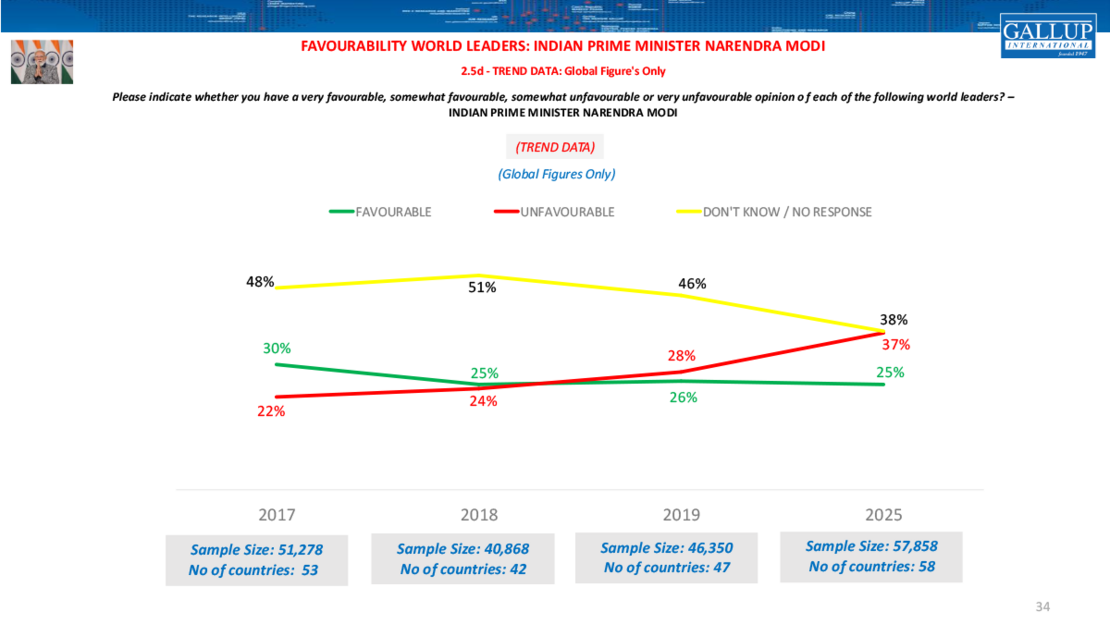
Among the five political leaders tested, Donald Trump records the highest favourable rating globally at 30 %, narrowly ahead of Chinese President Xi Jinping at 29 %. They are followed jointly by Vladimir Putin and Narendra Modi, both of whom record a favourable rating of 25 % worldwide. Modi, who increasingly is positioning India as a superpower, while popular at home often lacks global support, his image shaped less by approval and more by limited recognition.
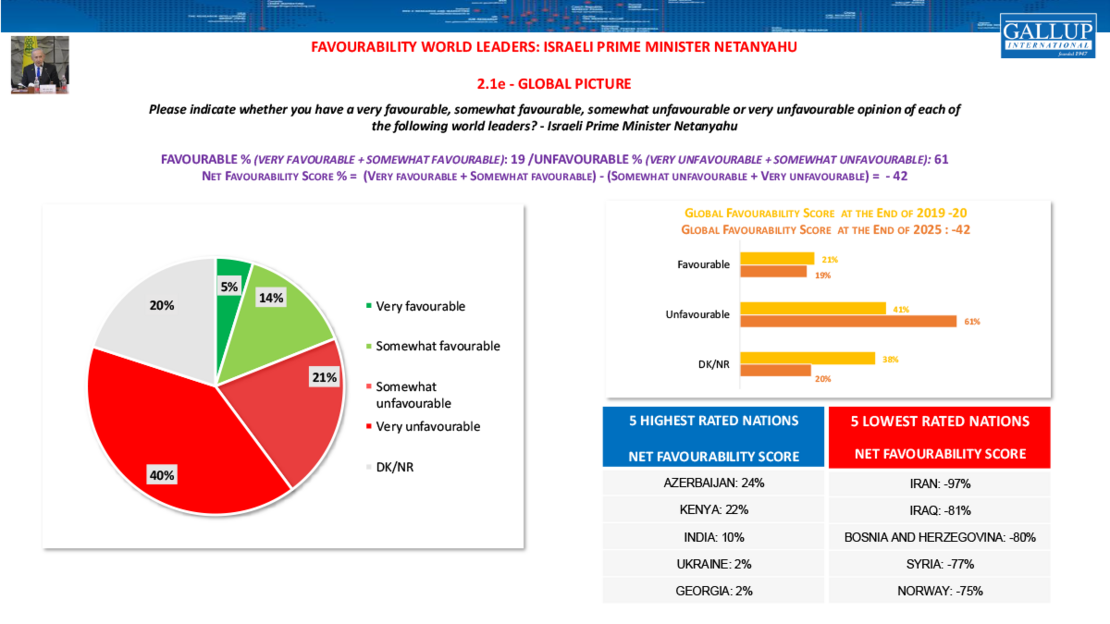
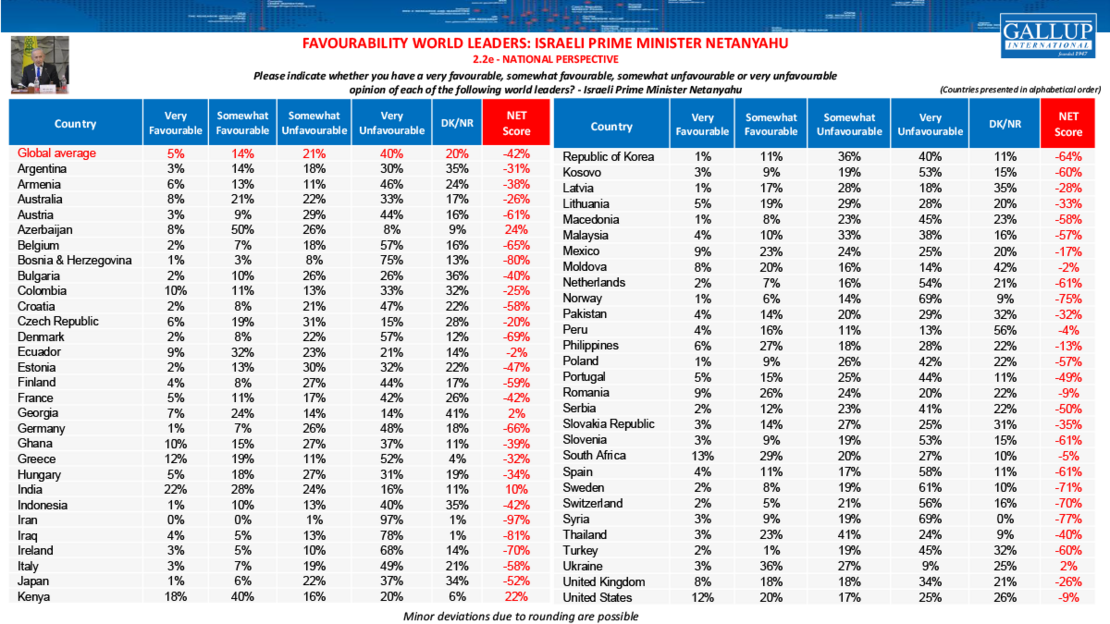
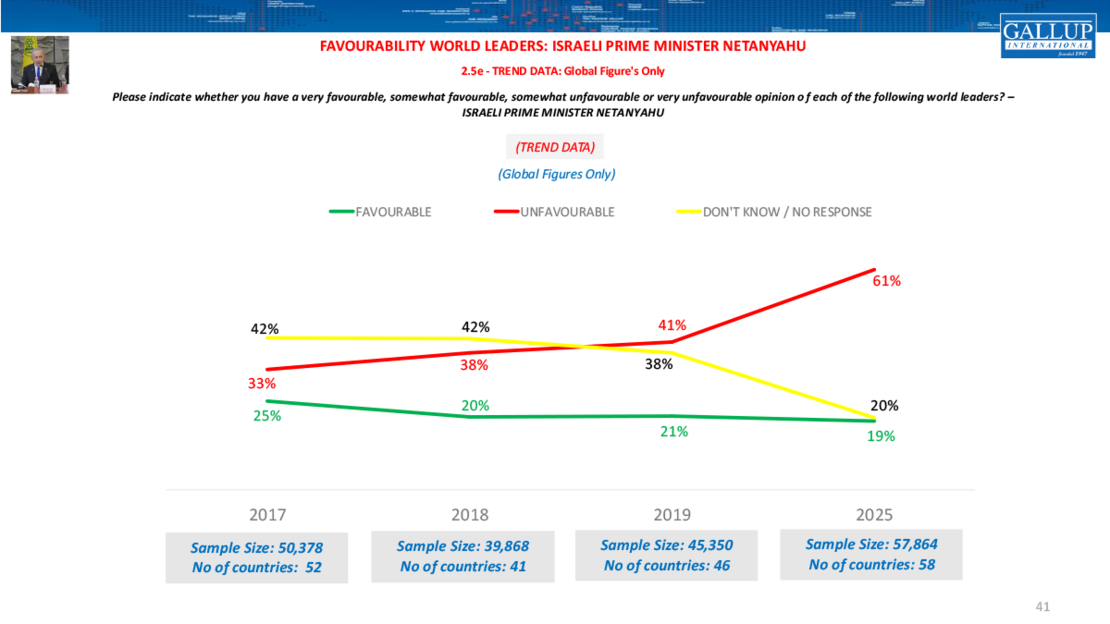
At the bottom of the ranking stands Israeli Prime Minister Benjamin Netanyahu, with only 19 % of respondents expressing a favourable opinion.
Q. Please indicate whether you have a very favourable, somewhat favourable, somewhat unfavourable or very unfavourable opinion of each of the following world leaders?
For the results, please see the table further down on this page.
Yet global averages alone do not fully capture leadership influence. A deeper measure is coun-try reach — the number of countries in which each leader holds a positive net image. Measured by the number of countries with positive net perception, Pope Leo leads with 51 countries, fol-lowed by Xi Jinping with 18, Donald Trump and Vladimir Putin with 13 each, Narendra Modi with 11, and Benjamin Netanyahu with only 5.
This country-reach ranking tells a deeper story than global averages alone.
Comparative Analysis from 2017
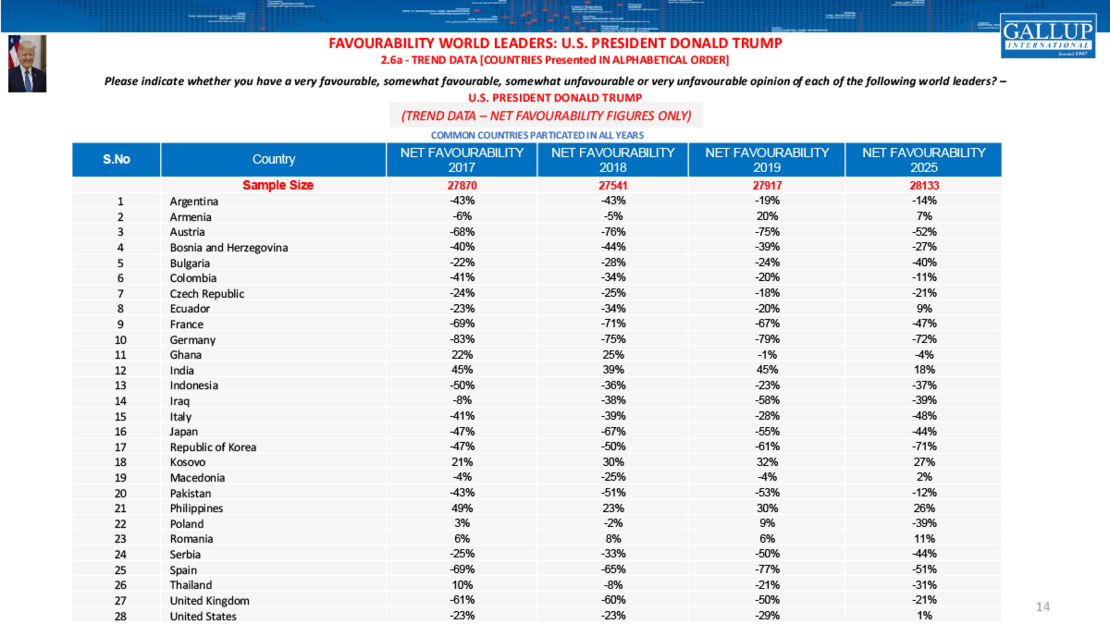
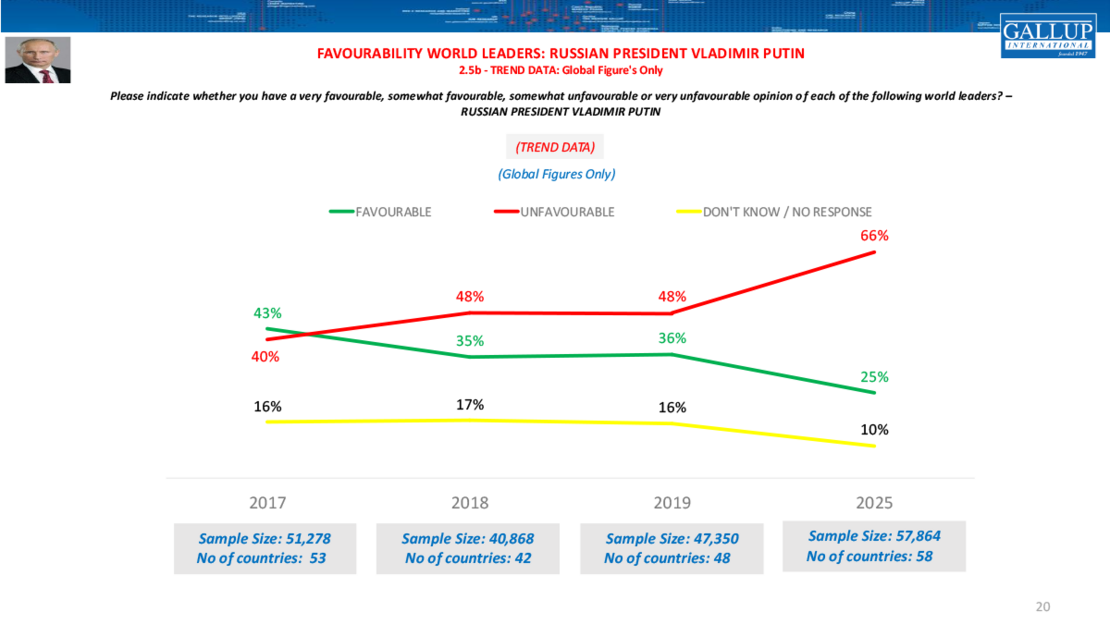
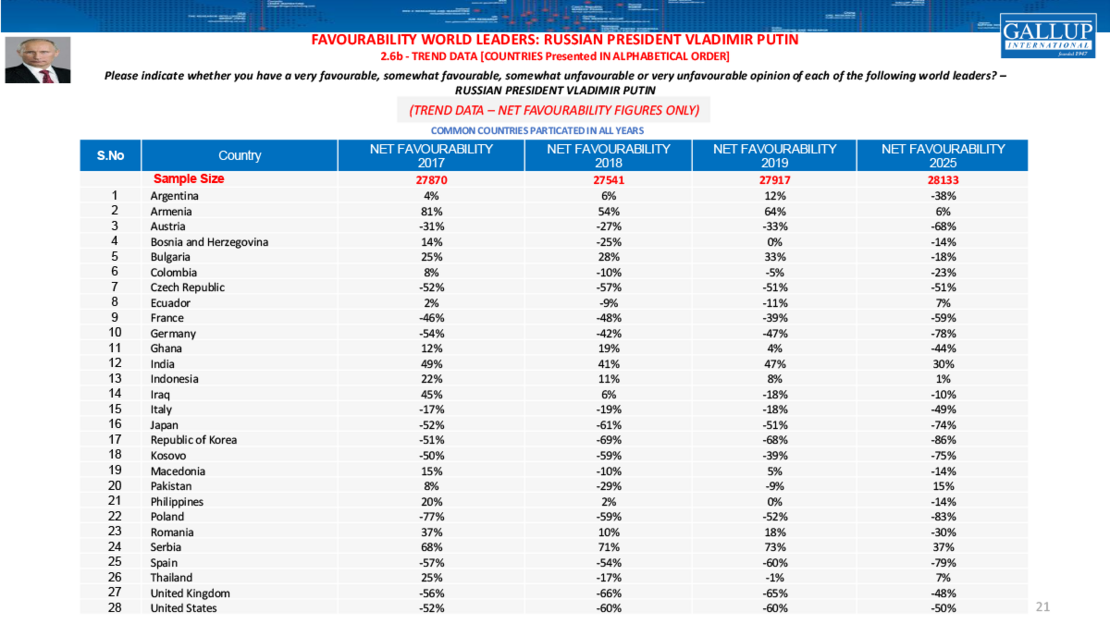
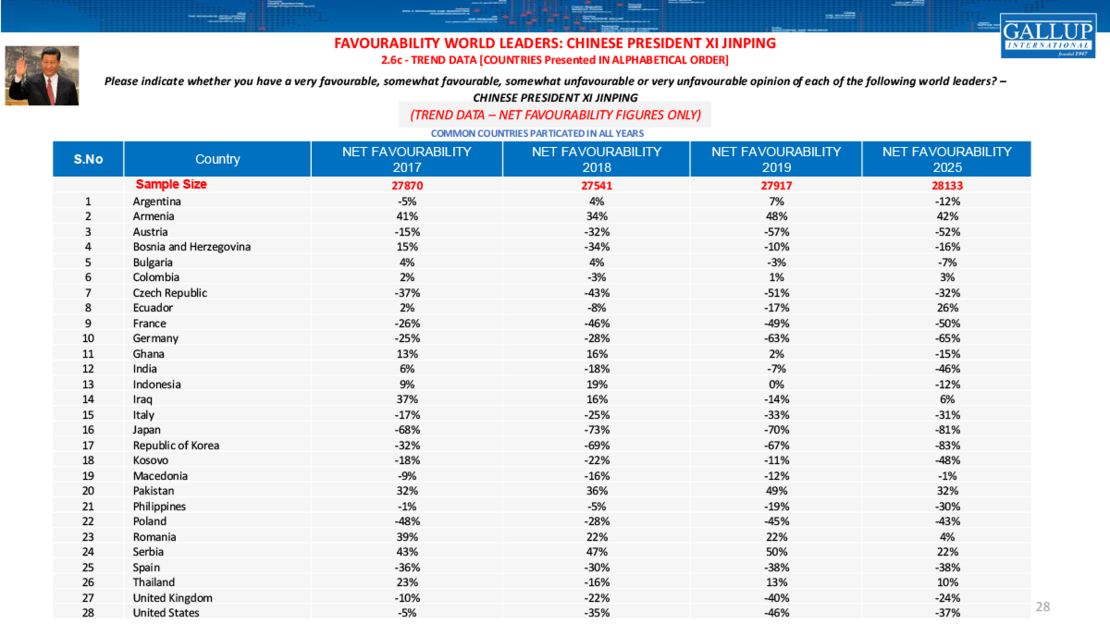
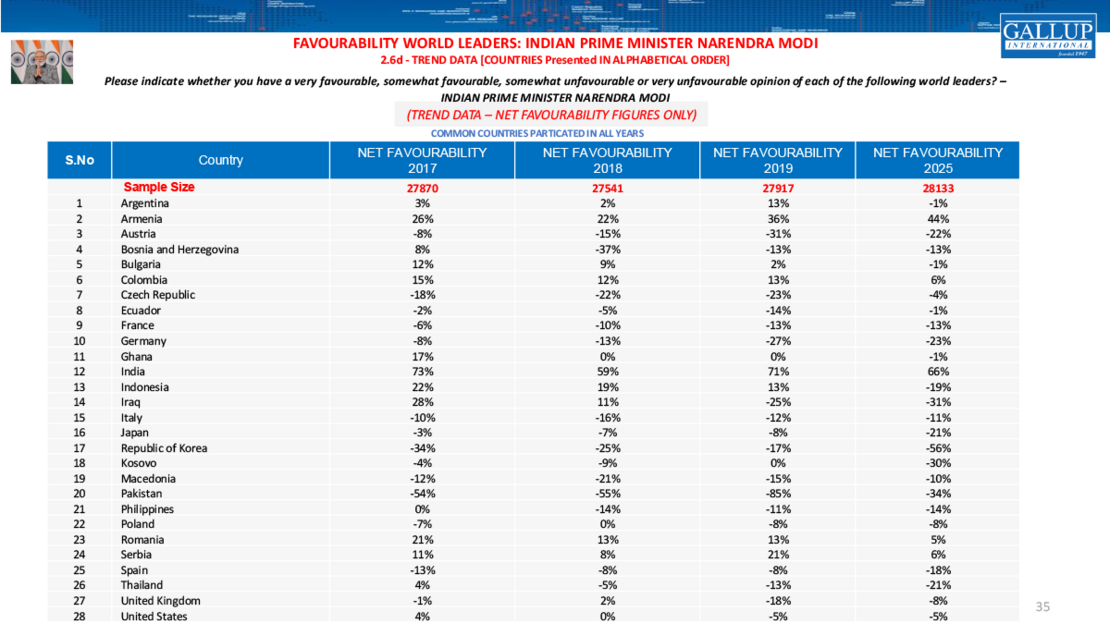
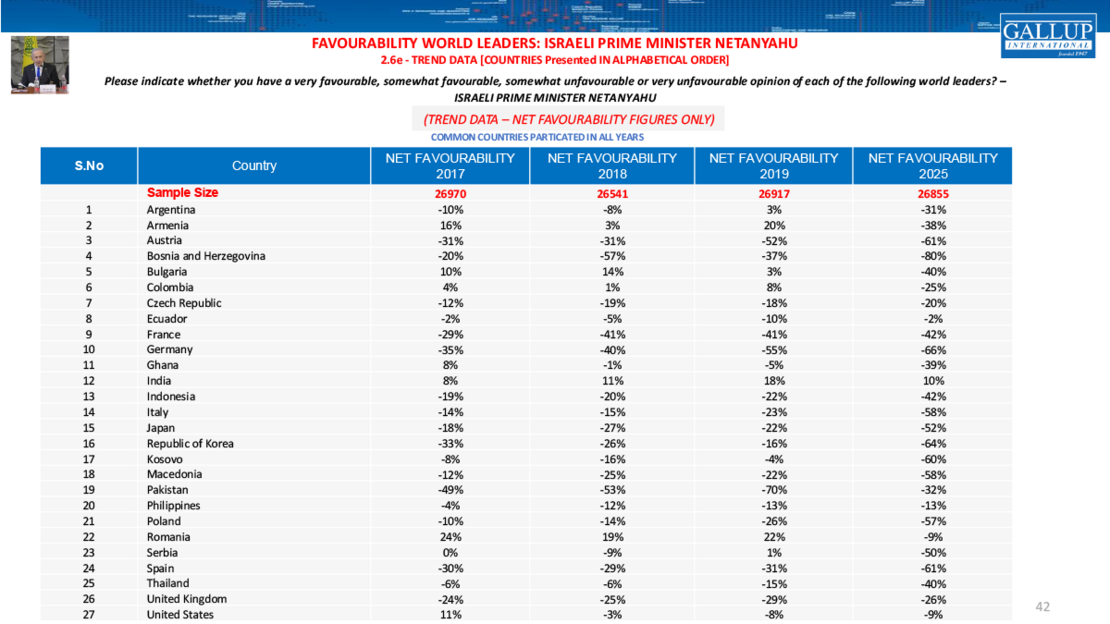
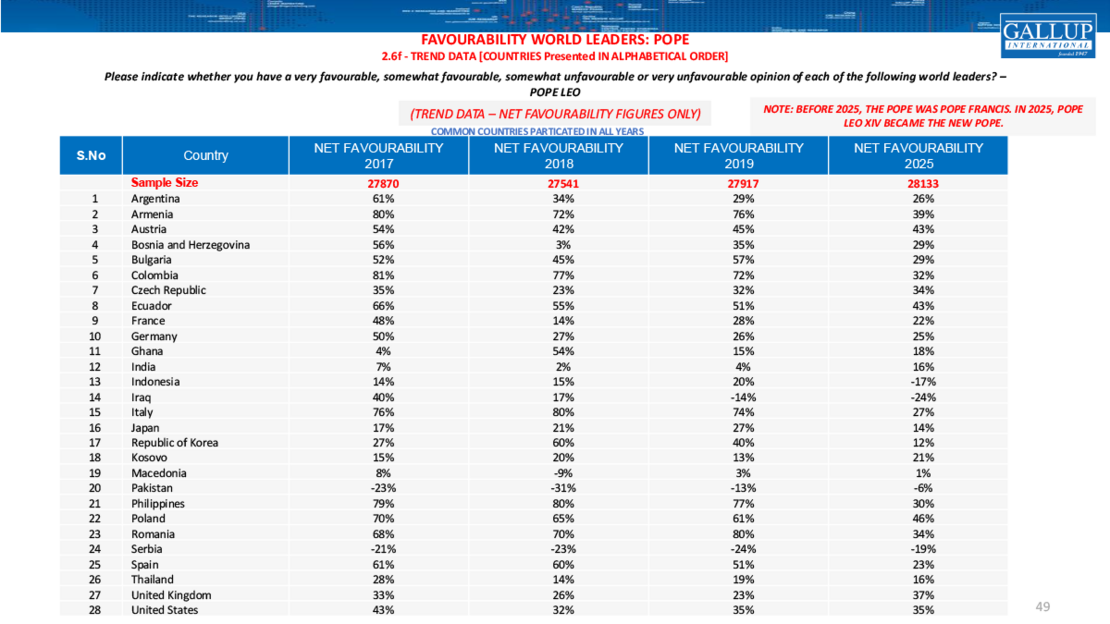
In 2017, Pope Francis enjoyed a global Net Favourability of +38, which in 2025, under Pope Leo, remains positive at +24, preserving the Papacy as the world’s most trusted leadership institu-tion. Donald Trump, who was already deeply polarizing in 2017 at –27, has become slightly more negative globally in 2025 at –31. Xi Jinping has shifted from a mildly positive global standing of +6 in 2017 to a clearly negative –23 in 2025, while Narendra Modi has similarly moved from +8 to –12. Vladimir Putin’s image has experienced one of the sharpest reversals, declining from +3 in 2017 to –41 in 2025, and Benjamin Netanyahu has followed a comparable trajectory, falling from –8 in 2017 to a deeply negative –42 in 2025.
Regional Analysis
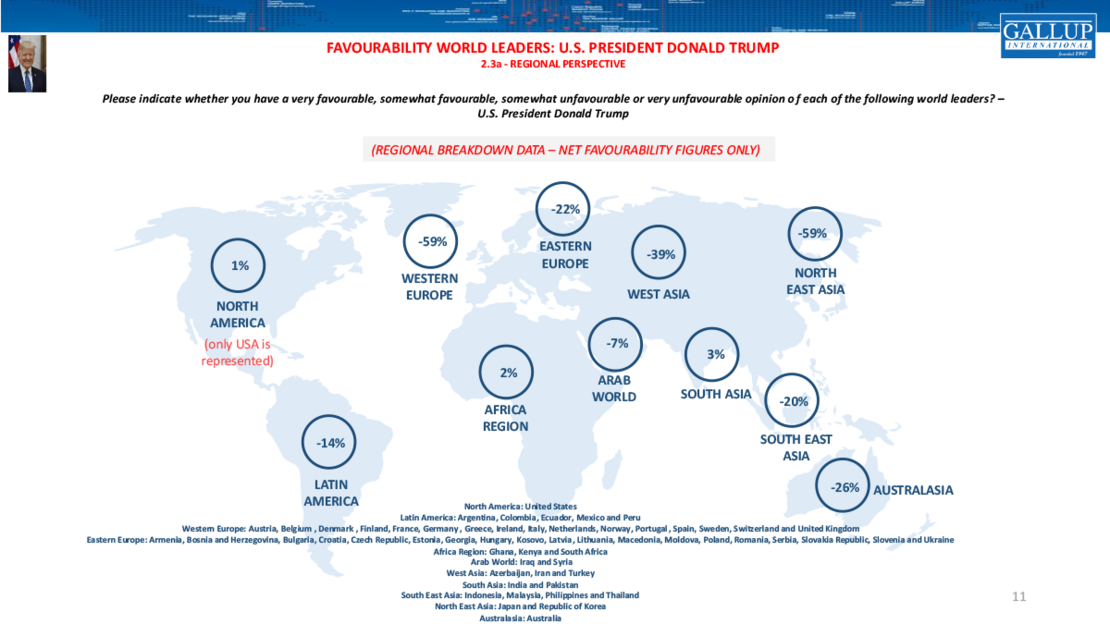
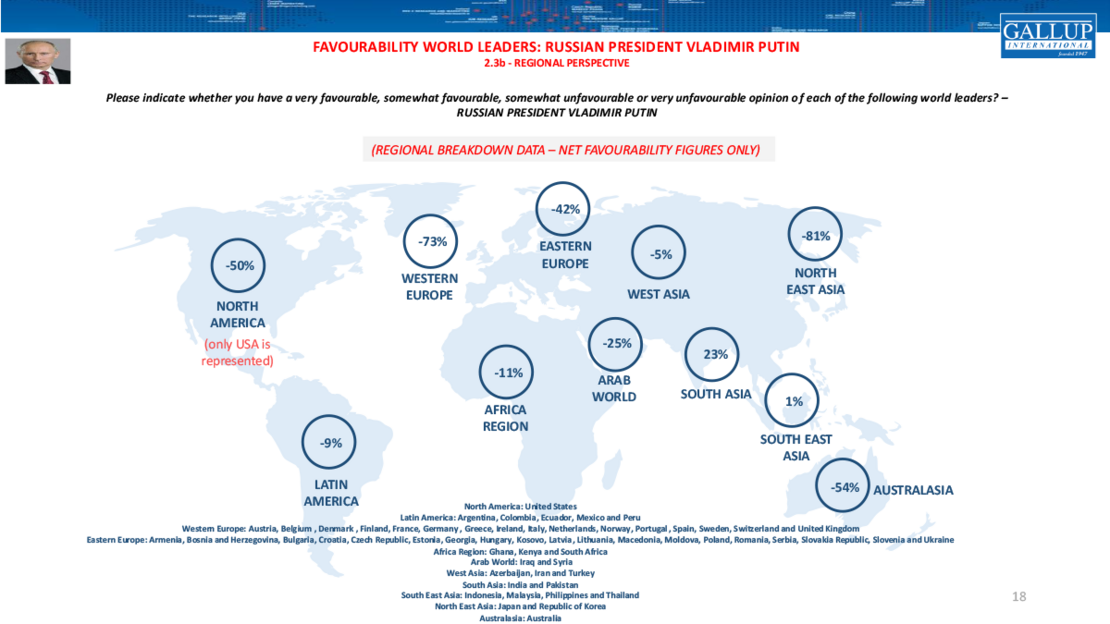
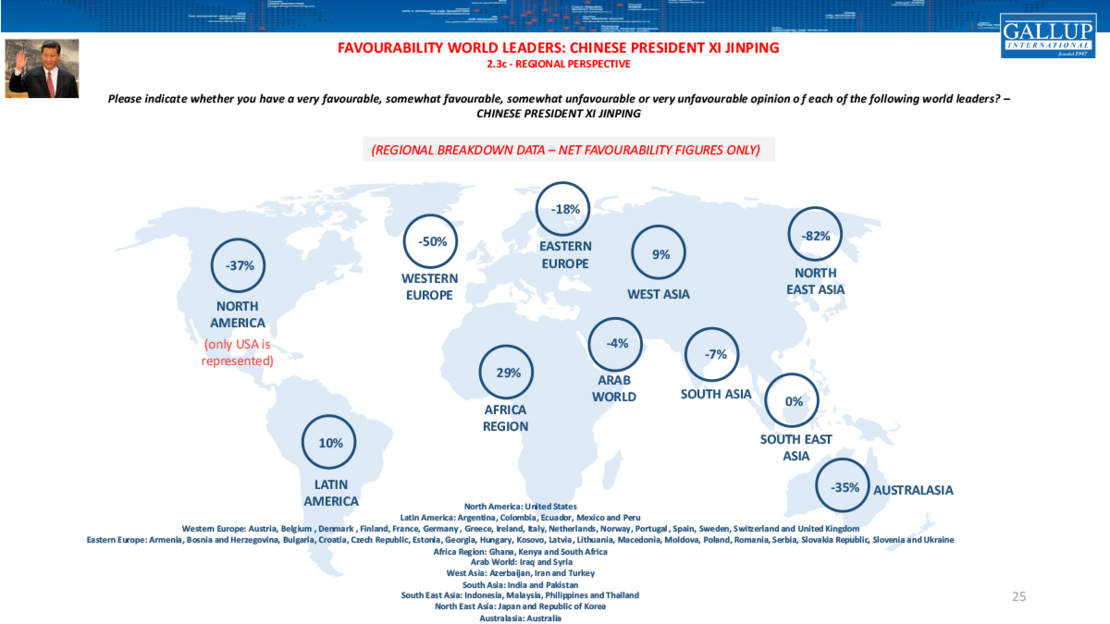
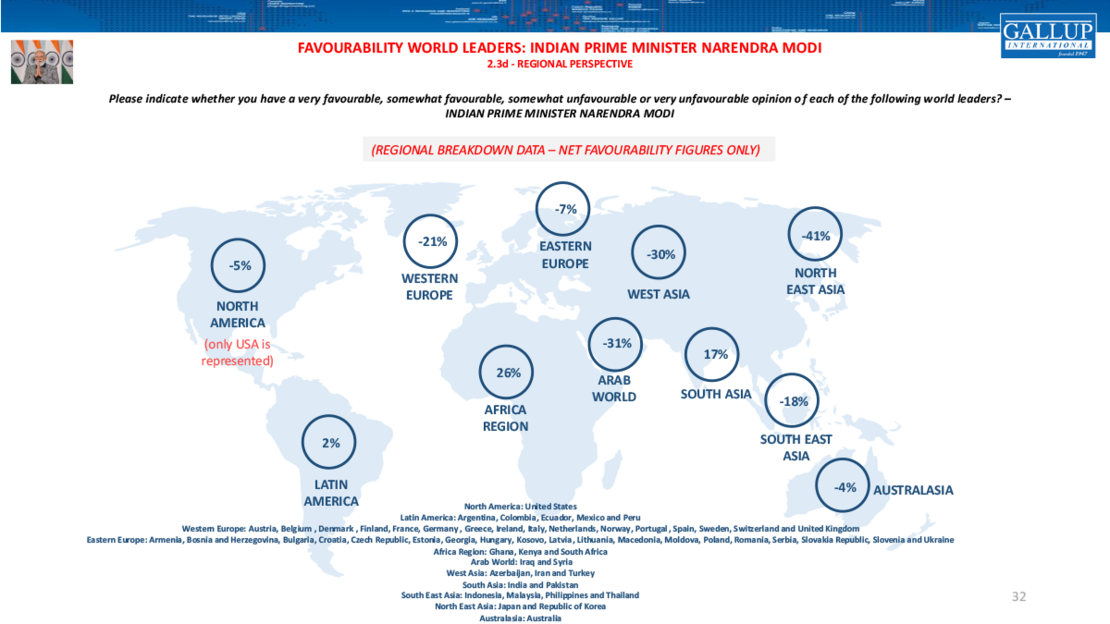
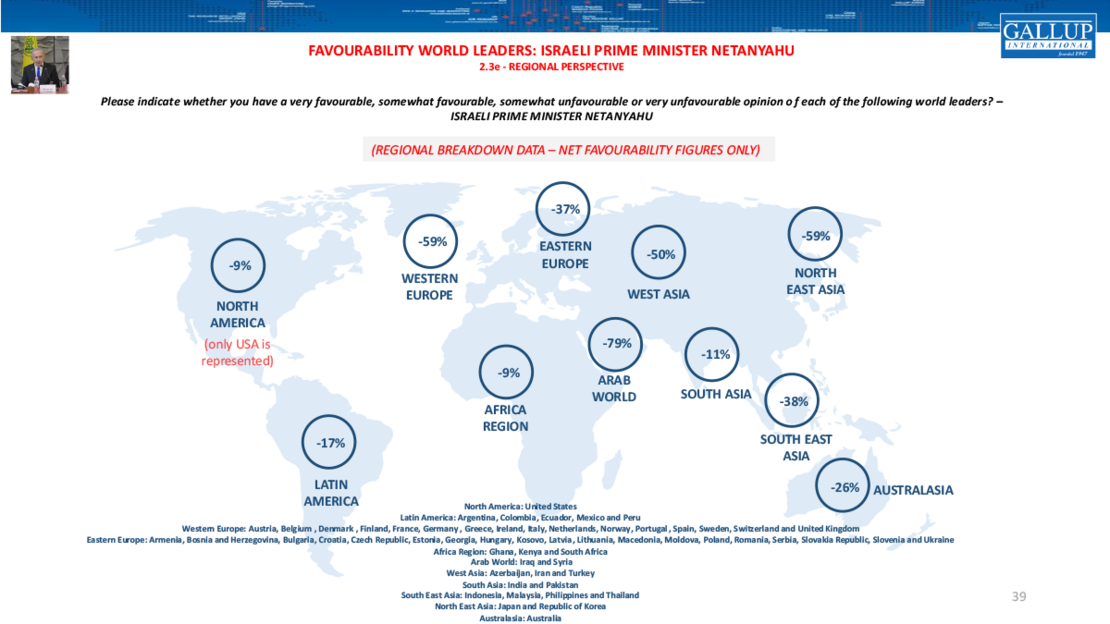
Regionally, Pope Leo dominates across most parts of the world, recording strong positive net favourability in Africa (+36), North America (+35), Latin America (+34), Eastern Europe and Aus-tralasia (+31 each) and Western Europe (+29), while remaining only slightly positive in West Asia (+3) and turning negative mainly in the Arab World (–18). Donald Trump performs marginally pos-itive only in South Asia (+3), Africa (+2) and North America (+1), but is deeply negative in West-ern Europe and Northeast Asia (–59 each). Xi Jinping performs positively in Africa (+29), Latin America (+10) and West Asia (+9), but faces strong rejection in Northeast Asia (-82), Western Europe (–50) and North America (–37). Narendra Modi shows positive standing in Africa (+26), South Asia (+17) and marginally in Latin America (+2) but remains negative across Northeast Asia (-41), Arab World (–31), West Asia (–30) and Western Europe (–21). Vladimir Putin is nega-tive in most regions, with particularly severe rejection in Northeast Asia (-81), Western Europe (–73), Australasia (-54) and North America (–50), while Benjamin Netanyahu records the strong-est regional rejection of all leaders, especially in the Arab World (–79), Northeast Asia (-59), Western Europe (–59) and West Asia (–50).
Note to editors
Sample Size and Mode of Fieldwork
The survey interviewed 64,097 adults aged 18+ across 61 countries worldwide. In each country, typically around 1,000 respondents were interviewed between October and December 2025.
Of the 61 countries surveyed, 57 employed a national sample, while 4 interviewed urban only populations. In terms of sample size, 10 countries had a sample size of under 1000, 15 countries had a sample size of 1000, and 36 countries had a sample size exceeding 1000. As for survey modes, 10 countries used CATI (Computer-Assisted Telephone Interviewing), 38 countries used CAWI (Computer-Assisted Web Interviewing), and 13 countries employed face-to-face inter-views. In terms of sampling methods, 2 countries utilized a non-probability sample, 33 countries used quota sampling, and 26 countries applied random probability sampling. For details see: www.gallup-international.com
About Gallup International Association
Gallup International Association (GIA) is the world’s leading global independent association in market research and public opinion polling.
For more than 75 years, Gallup International members have demonstrated their expertise in conducting multi-country surveys on a fully comparable basis, consistently delivering research of the highest methodological quality. Today, the Association brings together over 65 members who together with partners have the capacity to cover more than 130 countries of the world with opinion polling. Each member is a leading national research institute with deep local expertise in research methods, statistical systems, culture, and social context.
With a strict one-member-per-country policy, Gallup International ensures independence, credibility, and the highest professional standards. Member agencies collaborate closely on a daily basis, sharing knowledge, innovative research techniques, and tools, while jointly deliver-ing robust, reliable, and culturally informed insights for international research projects.
Gallup International was founded in 1947 by George Gallup, the pioneer of modern scientific public opinion research together with colleagues from 10 countries.